

Canvas Tote Bags vs Plastic Bags: The Complete Guide 2026

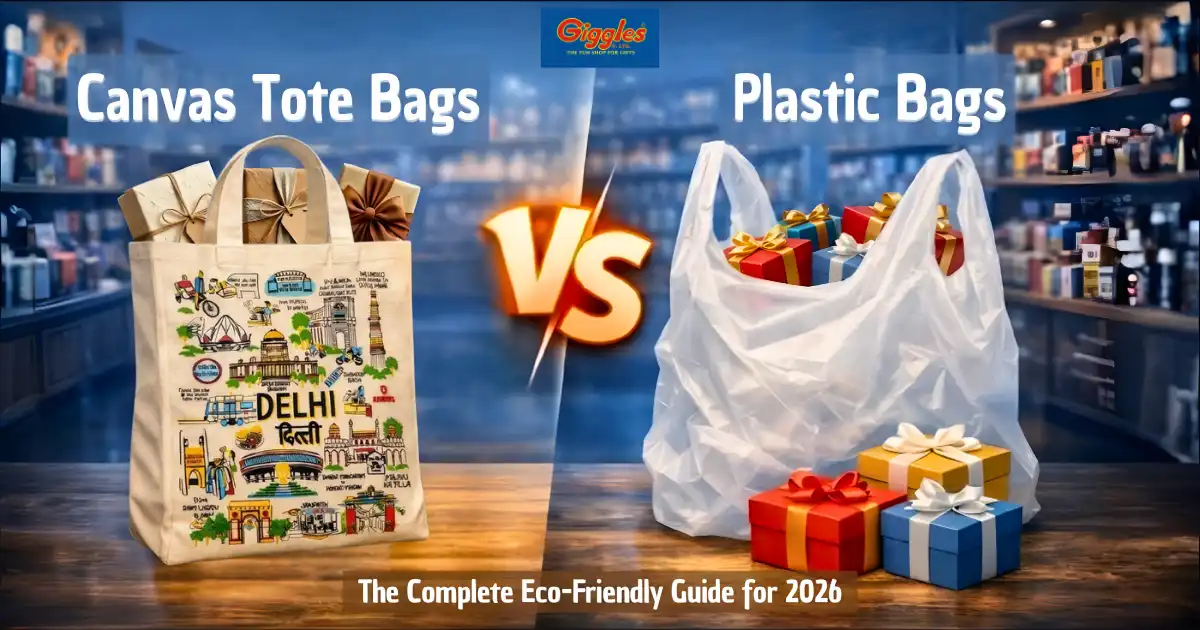
Every day, millions of Indians make a simple choice at the grocery store, the gift shop, or the market — plastic bag or something better? The debate around canvas tote bags vs plastic bags has never been more relevant, especially with India’s expanding single-use plastic ban and a growing wave of eco-conscious consumers reshaping how we shop, gift, and live.
Whether you’re a conscious shopper looking to reduce waste, a business owner rethinking your packaging, or someone exploring eco-friendly gifting options in India, this guide breaks down everything you need to know — from environmental impact and durability to cost, style, and the best use cases for each.
Let’s settle this once and for all.
What Are Canvas Tote Bags? A Quick Overview
Canvas tote bags are open-top carry bags made from tightly woven fabric — most commonly natural cotton, organic cotton, or jute. The term “canvas” originally referred to a heavy-duty plain-woven textile used for sails and tents, which tells you a lot about its strength. Today, canvas totes come in hundreds of styles, sizes, and prints, serving as shopping bags, fashion accessories, corporate gift items, and everyday essentials.
Key materials used in canvas bags include:
- Standard cotton canvas — The most common; durable and widely available
- Organic cotton canvas — Grown without synthetic pesticides, lower chemical impact
- Jute canvas — Highly biodegradable, grows rapidly, requires little water
- Recycled cotton blends — Made from post-consumer textile waste, with the lowest production footprint
What Are Plastic Bags? Understanding the Enemy
Plastic bags — particularly the thin HDPE (High-Density Polyethylene) bags handed out at stores — are made from fossil fuel derivatives. They are lightweight, waterproof, and inexpensive to manufacture, which is precisely why billions are produced globally each year. However, these same traits make them one of the most persistent pollutants on Earth.
Common plastic bag types include:
- HDPE bags — Standard thin grocery bags
- LDPE bags — Softer, semi-transparent bags used for produce or bread
- Polypropylene (PP) bags — Slightly thicker, sometimes branded as “reusable” in stores
In India, the government banned single-use plastic items below 75 microns in July 2022 under the Plastic Waste Management Amendment Rules, pushing businesses and consumers toward alternatives like canvas, jute, and cloth bags.
Canvas Tote Bags vs Plastic Bags: Head-to-Head Comparison
Let’s compare the two across every dimension that matters to an everyday consumer.
1. Environmental Impact: Who Wins the Green Battle?
This is where the comparison gets surprisingly nuanced. At first glance, canvas bags seem like the obvious eco-winner — and in many ways, they are. But the full picture requires understanding Life Cycle Analysis (LCA), which measures a product’s environmental cost from raw material extraction to disposal.
Plastic bags: A single HDPE plastic bag produces roughly 3.5 kg of CO₂ equivalent during production. However, it takes centuries to decompose, breaking down into harmful microplastics that contaminate soil, water, and the food chain. Globally, over 100,000 marine animals die every year from plastic ingestion or entanglement.
Canvas bags: One standard cotton canvas tote generates approximately 598 kg of CO₂ equivalent in production — largely because cotton farming is water and pesticide-intensive. This means a canvas bag must be reused at least 131 times to offset its carbon footprint compared to a single-use plastic bag. If you account for the secondary uses of plastic bags (such as bin liners), that number climbs to over 327 reuses.
However — and this is crucial — canvas bags do not leave behind microplastics. They are biodegradable, compostable, and do not accumulate in oceans. Their long-term ecological harm is dramatically lower than plastic bags when used consistently over time.
Verdict: Canvas bags win if you actually reuse them. Reuse them more than 131 times and you’re actively net-positive for the planet.
2. Durability & Lifespan
Canvas tote bags are significantly more durable than plastic bags. A quality cotton or jute canvas tote can carry weights of 15–20 kg without tearing, while standard plastic bags typically give way under 5–7 kg. Plastic handles cut into your hands; canvas straps distribute weight comfortably over the shoulder.
A well-maintained canvas bag lasts 3–5 years or more with regular use — easily replacing thousands of plastic bags over its lifetime. Plastic bags, meanwhile, degrade after a single use and often tear even during that one trip.
Verdict: Canvas bags win decisively on durability and longevity.
3. Cost Comparison: Which Is More Budget-Friendly?
Plastic bags appear cheaper upfront — often “free” at stores. But that cost is hidden in your bill, borne by the retailer, and ultimately by the environment. A canvas tote bag typically costs between ₹80–₹500 in India, depending on material quality and design.
Consider this: if you shop twice a week and use 3–4 plastic bags each time, you’re consuming roughly 300–400 plastic bags a year. At ₹3–5 per bag, that’s ₹900–₹2,000 annually — versus a one-time canvas bag purchase that lasts years.
Verdict: Canvas bags are more cost-effective in the long run. Plastic bags carry a deceptive hidden cost.
4. Versatility & Everyday Use
Canvas tote bags are genuinely multipurpose. They work as grocery bags, gym bags, beach bags, office carry-alls, book bags, travel pouches, and of course, beautiful gift bags. Their open-top design and sturdy base make them ideal for carrying fragile items like candles, décor pieces, or hampers.
Plastic bags, while convenient for quick purchases, are structurally unreliable, aesthetically limited, and unsuitable for repeated use across contexts.
Verdict: Canvas bags offer far greater versatility for daily life and special occasions alike.
5. Style, Customization & Gifting Appeal
Canvas totes have become legitimate fashion statements. They can be screen-printed, hand-painted, embroidered, or block-printed — making them ideal for personalized gifts, corporate gifting, brand promotions, and festive hampers. The natural texture of canvas gives it a premium, artisanal feel that plastic can never replicate.
For occasions like Diwali, birthdays, weddings, or corporate events, a beautifully designed canvas tote bag doubles as both packaging and a lasting gift in itself.
Verdict: Canvas bags win on aesthetics, brand value, and gifting potential.
6. Hygiene & Washability
Canvas bags can be machine-washed or hand-washed with mild detergent, making them hygienic for repeated use — especially for carrying food items. Plastic bags cannot be washed and should never be reused for food once soiled.
Important tip: wash your canvas bag regularly, especially after carrying raw produce or food items. Bacteria can accumulate in the fabric folds if not cleaned periodically.
Verdict: Canvas bags are more hygienic with proper care.
7. Water Resistance
This is one area where plastic bags have a clear advantage. HDPE plastic bags are naturally waterproof. Standard canvas is not — though waxed canvas or treated canvas bags can offer some water resistance. In monsoon-heavy regions of India, this is a practical consideration.
Verdict: Plastic bags win on water resistance. Opt for waxed or coated canvas alternatives if waterproofing is critical.
Canvas Tote Bags vs Plastic Bags: Quick Comparison Table
| Feature | Canvas Tote Bag | Plastic Bag |
| Material | Natural cotton, jute, or recycled fabric | HDPE / LDPE (fossil fuel derivative) |
| Durability | 3–5+ years with regular use | Single use (often tears) |
| Biodegradable? | Yes — weeks to months | No — 100–500+ years |
| Microplastics | None | Yes — major pollutant |
| Carbon Footprint | High at production; low over lifetime | Low at production; high over lifetime |
| Cost (upfront) | ₹80–₹500 | ₹2–₹5 (or “free”) |
| Cost (long-term) | Very low | High (repeated purchase) |
| Washable? | Yes | No |
| Water Resistant? | Standard: No | Waxed: Yes | Yes |
| Customizable? | Yes — print, embroider, paint | Limited |
| Gifting Value | High — doubles as a gift itself | None |
| Legal Status in India | Fully permitted and encouraged | Banned below 75 microns (2022) |
The Truth About Canvas Bags and the Environment: Busting the Myths
Myth 1: “Canvas bags are always greener than plastic.”
Not automatically. A canvas bag only becomes truly eco-friendly when used consistently and repeatedly — at least 131 times, according to sustainability research. If you buy a canvas tote and use it twice before forgetting it at home, its carbon investment isn’t justified. The key is committed reuse.
Myth 2: “Plastic bags are too harmful to ever use.”
Plastic bags, when properly reused and recycled, have a lower carbon footprint per use than many alternatives. The real problem is single-use behaviour and improper disposal — not the bag itself. The issue is systemic, not just material.
Myth 3: “Organic cotton bags are always the best option.”
Organic cotton eliminates synthetic pesticides, but it still requires significant water and land use. In fact, some studies suggest organic cotton bags may need even more reuses (over 20,000 times in extreme calculations) to offset water consumption compared to conventional cotton under certain assumptions. A recycled cotton or jute bag often has a lower net footprint.
Myth 4: “All canvas bags are the same.”
Far from it. GSM (grams per square meter) determines quality — a 300–400 GSM canvas bag is far more durable and long-lived than a 140 GSM one. The higher the GSM, the longer the bag will serve you, and the better its environmental trade-off becomes over time.
Canvas Tote Bags as Gifts: Why They’re Perfect for Every Occasion
One of the most exciting trends in gifting — particularly in India — is the rise of the canvas tote bag as a premium gift item. Whether as standalone gifts or as gift packaging itself, canvas totes check every box:
- Personalizable: Add the recipient’s name, a quote, or custom artwork
- Useful long after the occasion: Unlike decorative wrapping that gets discarded
- Eco-statement: Sending a canvas tote communicates thoughtfulness and values
- Suitable for all ages: Kids, professionals, parents, and seniors alike
- Budget-flexible: Works for ₹200 gifting as well as premium ₹2,000+ hampers
Canvas tote bags are especially popular for:
Corporate Gifting
Businesses across India are replacing plastic-wrapped corporate gift boxes with canvas tote hampers — filled with premium stationery, candles, fragrances, or artisan products. A branded canvas bag doubles as a walking brand visibility long after the event ends.
Festive Gifting (Diwali, Christmas, New Year)
Canvas totes filled with scented candles, dry fruits, home décor items, or fragrance sets make for stunning Diwali or Christmas hampers. The bag itself carries the festive mood — and can be reused for years by the recipient.
Wedding & Return Gifts
Personalized canvas totes with the couple’s name and wedding date make for elegant, functional return gifts that guests actually keep and use — a far cry from forgettable plastic-wrapped trinkets.
Birthday Gifts for Her or Him
An artsy canvas tote packed with lifestyle accessories, scented candles, or a personalized mug makes an impressive birthday gift for any age group.
India’s Plastic Ban & Why Canvas Bags Are the Future
India’s Ministry of Environment, Forest and Climate Change enforced a ban on identified single-use plastic items from July 1, 2022. This includes plastic carry bags below 75 microns, plastic cutlery, straws, and several other items. By December 2022, the minimum thickness requirement for plastic bags was further revised to push towards phasing out thin carry bags entirely.
This regulatory shift has accelerated demand for canvas, jute, and cloth bag alternatives across India’s retail, gifting, and FMCG sectors. For conscious consumers and businesses alike, canvas totes are no longer just a lifestyle choice — they’re increasingly a compliance requirement.
Cities like Delhi (where Giggles Gifts is rooted), Mumbai, Bangalore, and Chennai have seen a surge in demand for premium reusable bags, especially as gift items and branded merchandise.
How to Choose the Right Canvas Tote Bag
Not all canvas bags are equal. Here’s what to look for when buying one:
Check the GSM (Weight)
GSM stands for grams per square metre. A higher GSM means a thicker, more durable fabric. For everyday use, look for 280–400 GSM. Lower GSM bags (under 200) tend to wear out quickly and defeat the purpose of sustainability.
Opt for Organic or Recycled Cotton
Whenever possible, choose canvas bags made from organic cotton (GOTS certified) or recycled textile blends. These have a meaningfully lower environmental impact during production.
Look for Reinforced Stitching
The handle attachment points are the first place canvas bags give way. Double-stitched or reinforced handles extend the bag’s useful life significantly.
Consider Your Use Case
For gifting, go for a well-designed printed tote. For daily grocery runs, a plain natural canvas bag is practical and washable. For corporate gifting, opt for bags with custom printing options and a consistent size.
Tips to Maximise the Eco-Impact of Your Canvas Tote Bag
- Always keep one in your bag or car — the #1 reason people still reach for plastic bags is forgetting their reusable one
- Wash it regularly — especially after carrying fresh produce or raw food
- Choose quality over quantity — one high-GSM canvas tote used for 5 years beats ten cheap totes that fall apart
- Repair before discarding — a loose stitch or small tear can easily be fixed, extending the bag’s life by years
- Repurpose old canvas bags — when a bag is too worn for shopping, use it as a storage bag, plant holder, or upcycled art project
- Gift them forward — a canvas tote given as a gift educates and inspires eco-conscious behaviour in others
Conclusion
The answer, when considered holistically, is clear: canvas tote bags are the superior choice — for the environment, for your wallet in the long run, for gifting, and for your daily lifestyle — provided you use them consistently and with intention.
Plastic bags may seem convenient, but their hidden costs — environmental degradation, microplastic contamination, marine ecosystem damage, and India’s growing regulatory restrictions — make them an increasingly untenable option for both individuals and businesses.
A canvas tote bag, on the other hand, is a small but meaningful commitment to a cleaner, more thoughtful way of living. And when chosen as a gift, it communicates something powerful: that you care not just about the moment, but about the world the recipient lives in.
FAQs About Canvas Tote Bags vs Plastic Bags
Are canvas tote bags better for the environment than plastic bags?
Yes — canvas tote bags are better for the environment over their full lifetime, as they are biodegradable, reusable, and do not produce microplastics. However, to offset their higher production carbon footprint, a canvas bag should be reused at least 131 times. Consistent, long-term use makes them significantly greener than single-use plastic bags.
How many times do you need to use a canvas tote bag to make it eco-friendly?
Research suggests a standard cotton canvas bag needs to be reused approximately 131 times to offset its carbon footprint relative to a single-use plastic bag. If you use your canvas bag for daily errands, you could hit this number within a year. Organic cotton and jute bags may require fewer or more reuses depending on the specific production process.
Why are canvas bags better than plastic bags?
Canvas bags are more durable, reusable, washable, biodegradable, and customizable. They do not shed microplastics, can last for years, and carry significant aesthetic and gifting value. While their upfront cost is higher, they are far more economical and environmentally responsible over time compared to single-use plastic bags.
What is the difference between a canvas bag and a tote bag?
A “tote bag” refers to the open-top, two-handled bag shape — it describes the form. A “canvas bag” refers to the material. A canvas tote bag is simply a tote bag made from canvas (woven cotton or similar natural fabric). Not all tote bags are canvas — some are made from non-woven polypropylene, nylon, or recycled plastics.
Which is more eco-friendly: a canvas bag or a jute bag?
Jute bags generally have a lower environmental impact at production — jute is a fast-growing crop that requires minimal water and no synthetic fertilizers. Canvas bags made from organic cotton come close and offer better printability and aesthetics. For the most eco-friendly choice, look for bags made from recycled or organic materials with certifications like GOTS or OEKO-TEX.
Can canvas tote bags be used for gifting?
Absolutely — canvas tote bags are among the most popular gifting accessories in India today. They can be customized with names, logos, quotes, and artwork, and work beautifully as gift packaging for festive hampers, corporate gifts, wedding return gifts, and birthday presents. Unlike traditional packaging, a canvas gift bag continues to be used and appreciated long after the occasion.